You can translate this blog using Google translator widget. And you can always comment in your language, of course!
Yellow texts are in English
1.5.13
Foto del mes
30.4.13
Próxima biografía
Estamos de enhorabuena, pues si hace poco Amy Lawrence publicaba una biografía, ahora sabemos de un nuevo libro que aparecerá el próximo 15 de diciembre:
La foto elegida como portada es bastante desconocida, la fecho en torno a principios de los 50, una vez rodada ya A place in the sun (Un lugar en el sol).
12.8.12
A place in the sun.- card
A place in the sun.- credits
3.8.12
A place in the sun.- novel
2.8.12
A place in the sun.- lobby card hispanos
4.10.11
Biografía de Patricia Bosworth.- críticas y opiniones
Éstas son algunas de las reseñas elogiosas que suscitó la biografía:
(English text)
" (...) Because of Bosworth's artistry, her ability to choose the right details, and her own immersion in the subject... (this book) is an amazing excursion into a life".- New York Times Book Review.
"It stands as the definitive work on the gifted, haunted actor".- Los Angeles Times.
"Here it is -the real thing- inside Montgomety Clift. I've know other actors as well, but none with such a barowing tale, could Patricia Bosworth have been there? Everywhere? The book is that vivid and intimate".- Elia Kazan.
1.10.11
Foto del mes
25.9.11
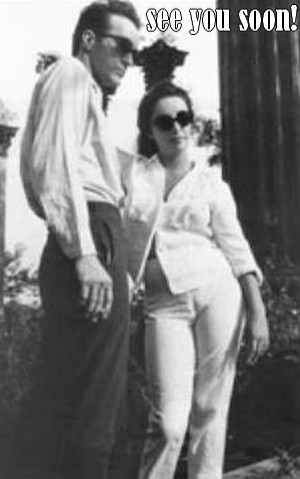
Con Elizabeth Taylor (3): en una limusina (1954)

Elizabeth Taylor and Montgomery Clift in a limo outside the St. Regis hotel, New York City 1954
http://es-es.facebook.com/pages/The-Montgomery-Clift-Blog/294929063544
24.9.11
Una carta de Jim -Brando Clift- Dean
En este post escribí sobre James Dean, de cómo Elia Kazan le habló de él a Montgomery Clift, de cómo Monty supo de la fulgurante carrera de Jimmy y de la anécdota, bastante conocida, de que James Dean, cuando era un simple aspirante a actor firmaba sus cartas como "Jim -Brando Clift- Dean".Aquí tenemos una de esas cartas. La escritura tan infantil y ese corchete que incliuye los apellidos de sus ídolos nos puede hacer pensar que no es auténtica, pero yo creo que sí. Perfectamente se puede haber conservado una de esas cartas. Si alguien entiende la letra y puede traducirla, se lo agradecería mucho.
22.9.11
The Misfits.- Nap time (fotos del rodaje)
El rodaje tuvo lugar en Reno, en el desierto de Nevada, en pleno verano con temperaturas que superaban los 40º y rodando escenas que requería mucho ejercicio físico como era la doma de caballos y las escenas de rodeo.
No es de extrañar que el equipo adoptara la costumbre tan española de la siesta. En un rodaje tan masivamente fotografiado y documentado como éste no podían faltar fotos que mostrasen el descanso de Montgomery Clift y el resto de actores y del director John Huston.
1.- Monty taking a nap next to John Huston and a dog.
18.9.11
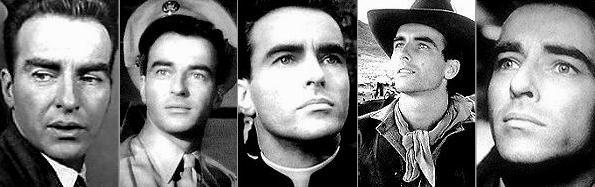
4 Monty moods
5.9.11
Fly away home.- ficha en la IBDB
Fly Away Home 48th Street Theatre, (1/15/1935 - circa. 7/1935)
Category: Play, Comedy, Original, Broadway Description: A play in three acts Setting: Living Room of the Masters' Summer Home in Provincetown, Mass. Produced by Theron Bamberger Written by Dorothy Bennett and Irving White Staged by Thomas Mitchell Scenic Design by Raymond Sovey Opening Night Cast
| |
1.9.11
Foto del mes

Esta foto no es la mejor de Monty pero representa mucho de su vida, su carácter y al propio blog. Un Monty prematuramente envejecido, tan delgado como cuando rodaba Red River 18 años atrás, empeñado en seguir trabajando; es fotografiado aquí durante el rodaje de The Defector durante el invierno de 1966. En las imágenes post accidente, la melancolía siempre compañará a Monty, no obstante esta fotografía es una excepción en ese sentido. Una fina sonrisa se escapa de sus labios y en su mirada que no ha perdido aún su vibrante fuerza se asoma su ilusión por ponerse de nuevo ante las cámaras. Monty era un trabajador nato. En cada rodaje se esforzaba al límite hasta la extenuación. "Si no trabaja, se morirá" decía Liz. Y así era. Cada trabajo era un regalo para los que admiramos su intuición interpretativa aunque no siempre acertara con guiones o directores.
Aceptó este papel para mostrar que podía afrontar el rodaje del nuevo proyecto de John Huston junto a su amiga del alma. Pero no pudo llegar a Reflejos en un ojo dorado. No pudo más pero lo dio todo hasta el final.
Su salud se deterioraba a ritmo vertiginoso pero nada minaba su ilusión por interpretar, por pulir las imperfecciones de los guiones, por discutir acaloradamente con los directores para argumentar cómo mejorar la película y dado su carisma y sobre todo su valía, lo conseguía pues en palabras de Fred Zinnemann "de 10 ideas que ofrecía, 8 eran buenas".
Hubiera sido un buen director. Y hubiera sido bonito ver una cuarta interpretación de Liz y Monty. Pero no estamos aquí para entristecernos ni pensar en lo que no ocurrió. No merece la pena porque Monty nos dejó hace 45 años y dado que nació hace 90, conocemos su vida tal y como transcurrió de 1920 a 1966. Y si yo fuera la guionista de su vida, tanto en lo personal como en lo actoral, no añadía ni quitaba una coma de su biografía. Porque Monty era así, auténtico cien por cien.
Y con unas denodadas ganas de vida. Contra todo pronóstico, ahí estaba en los rodajes. Así que la vuelta de Monty a la actuación es el reencuentro de vosotros con este blog. A las personas que me conocen en mi día a día les enseño con mucha ilusión este blog. Me gusta dar a conocer al Monty actor con sus magníficas interpretaciones tan camaleónicas, extasiarme ante lo guapo que era, describir su tormentosa biografía y revelar su carismática y compleja personalidad, su exquisita educación y los multiples problemas físicos, psíquicos, emocionales y sociales que tuvo.
Y contar mis pesquisas en la recopilación de fotos con una enorme colección de 14.000 fotos en la actualidad y en la búsqueda de datos sobre su biografía que me ha llevado a contctar con personas que le conocieron y con descendientes directos suyos como sus sobrinos y su sobrina-nieta a los cuales les reitero desde aquí su generosa amabilidad conmigo.
Este blog nació con la idea de ser un punto de referencia en Internet. Una idea ambiciosa y difícil de realizar pues en la web norteamericana de Google no aparece en primeras posiciones y en Facebook hay poquitos (eso sí, incondicionales) seguidores. Pero las ganas e ilusiones no permanecen intactas, créanme, se han incrementado porque no hay nada que me guste más que investigar y descubrir nuevas cosas de Monty Clift.
1.6.11
Almas gemelas
Conocida es la frase con que ella lo definió:
"The only person I know who is in worse shap than I am".
Y también cómo él supo valorar sus dotes de actriz cuando nadie la tomaba en serio.
“Marilyn Monroe was an incredible person to act with…the most marvelous I ever worked with, and I have been working for 29 years.”
“I have the same problem as Marilyn. We attract people the way honey does bees, but they’re generally the wrong kind of people. People who want something from us - if only our energy. We need a period of being alone to become ourselves.”
Esta foto, es una de mis preferidas de Monty, es tanta la ternura que desprende y se puede notar la complicidad que hubo entre ambos.
23.3.11
Hollywood's eyes are closed
Se nos ha ido Elizabeth Taylor. Y los amantes del cine, de sus ojos violetas, seguidores de su apasionada vida y hechizados de sus felinas interpretaciones andamos más que tristes.Pero en este blog podemos esbozar una sonrisa pensando en el reencuentro de los dos grandes amigos: Bessie Mae y Monty Clift.
1.3.11
Foto del mes
En esta foto Monty y Liz derrochan estilo. Me parece una d las fotos más cool de Monty.
1.2.11
Foto del mes
1.1.11
Foto del mes
7.9.10
Admiradora secreta

Lo curioso de la noche es que no fui la única que aplaudió flojito cuando salió el nombre de Montgomery Clift en los créditos. Justo delante de mí había una chica que lo hizo e incluso se me adelantó en su primera escena. Ya se sabe cuando el personaje de Eli Wallace lo nombra y enseguida se ve una figura que se yergue del suelo.
Aunque en esta película el rostro de Monty es cuanto menos, peculiar, recibe unos cuantos primeros planos. Y su interpretación es de las más histriónicas, encaja perfectamente con el papel de Perce Howland (habría que tener en cuenta, que por mucho que lo negara, Arthur Miller se inspiró en el propio Monty para el personaje).
Pues bien, en cuanto terminó la película, me acerqué a la chica para comentarle que había visto cómo aplaudía a Monty. Sí, ya sé que no es normal hacer esas cosas, pero aparte de que yo pueda ser así de extrovertida, no se encuentra todos los días una fan de Monty, ¡en tu ciudad!. Además quería hacerle llegar que tenía un blog dedicado al actor y toda la recopilación de información que tengo. Los que me conocen saben que son más mis ganas de compartir que, digamos, de presumir de ello.
Así que espero que esa chica entre por aquí y sobre todo disfrute con las fotos y la información que hay sobre el bueno de Monty. Una acalaración, le dije que tengo más de 8.000 fotografías. pero en el blog sólo aparecen la mitad. El tiempo siempre anda jugando a mi contra.
Un saludo a esa admiradora de Monty y ojalá él sea cada vez más conocido por sus magníficas interpretaciones.
23.8.10
21.8.10
Biography of Robert La Guardia.- Chapter one / Biografía de Robert LaGuadia.- capítulo 1
The public remembers him as a splendid screen presence, glamorous and vulnerable. He floats by on that giant sceen, the image of the intensity of youth, in its most beautiful guise. He was an overnight sensation. Men and women loved him for the promise offered by his unthreatening masculine grace and looks. Bobby-soxers screeched and pounded the floors when his magnificent, sensitive face loomed in darkened movie theaters. Fan clubs popped up all over the country. Hollywood moguls found themselves forced to accede to his demands, their rigid control over actors shattered. He was a total enigma: a polite, well-brought-up young man who achieved great power in Hollywood passively, without deviousness.
But for those people who saw Monty, the real Monty, close up -who lived with him and ached with him- the images are very different. Like a series of takes arriving at the editing laboratory, these memories of an older Monty flicker, out of sequence, with haunting power: Monty walking against the wintry Manhattan wind, his shoulder and hunched body leaning heavily against a black man, his male nurse. Collapsing over and over, ina state of drugged drunkenness, on the floor of a Fire Island summer house, as the homosexual boys and men, fatigued with picking him up, let him lie, and walk over him as if he were a piece of inanimate junk. Waking up in a semi-coma from drugs and liquor ina bedroom of his sepulchral townhouse on Sixty-first Street; being picked up bodily by his nurse an put under a cold shower, in order to face another dose of the life which drove him this state. His hands and body sometimes shake with tetany, because of a rare hormonal disease. His legs cannot hold him steadily -the drinking has brought on phlebitis. A thyroid condition has made him pop-eyed. Cataracts cause him to wear bottle-cap glasses. An automobile accident and too many pills have ruined his looks, made the scary, and a plastic surgeon with a criminal background begins to make them worse. He has been blackballed from themotion picture business. He sits in his bedroom, vacantly watching television, tears drenching his cheeks. He has destroyed his sexual life. He will not eat. He makes tearful, desperate calls, but his best friends have left him. He shoots Demerol into his arms to anesthetize himself to the pian of his existence. And he drinks... and he drinks.
At the age of forty-five, his heart stops.
The personal story, with its riveting horrors, seems locked in combat with his unique professional achievement. Montgomery Clift was, and still is, one of the more important influences on contemporary picture acting. Few of today's younger generation of moviegoers realize, when they sit back in awe at the intensity and truth of an Al Pacino or Robert De Niro or Dustin Hoffman or Jack Nicholson, that these actors' roots can be traced back, in large part, to the strivings of Monty Clift. Many people, when confronted with these so-called "rebel" actors, tend to think "Method" or "Actors Studio", or credit an actor by the name of Marlon Brando with having started it all, but that is a misconception.
The facts speak for themselves. Monty had no predecessor for his screen presence. He did not use the Method, and it was Brando and James Dean and the rest who followed and often built upon Monty's achievement.
To be continued...
19.8.10
Una foto para celebrar el post nº 1.000
Qué duda cabe que me hubiera gustado estar entre lasMonty's ladies
(English text)
Monty's Ladies circa 1948: Full-length image of American actor Montgomery Clift (1920 - 1966) smiling as he stands with his arms around Barbizon models Kay Grogen, Elena Long, Vivian Kennedy, Lynn Moore, and Maria O'Leary in front of a small stage. The women are all wearing long skirts. Clift is wearing a suit and a diagonally striped tie. (Photo by Hulton Archive).
18.8.10
Retrato (32).- Portrait by G. Maillard Kesslere, 1945
No sabía de la existencia de este retrato y me pregunto si Monty posó realmente o simplemente, como creo, el autor se inspiró en una fotografía. ¿Llegó Monty a verlo, lo tuvo o enseguida pasó a otras manos?. Me pregunto si lo tuvo algún miembro de la familia y quién es la persona que lo vende. Por otra parte, en las fotos se ve las sombras de quien hace fotos al cuadro para presentarlo a la subasta.
Ésta es la información que acompaña a la subasta:
(English text)
This is an original pastel drawing of Montgomery Clift by G. Maillard Kesslere in 1945. For those unfamiliar with him, you can find out all about him at: http://broadway.cas.sc.edu/index.php?action=showPhotographer&id=38 Just copy & paste into your browser. It is one of a kind and was rendered while Clift was performing on Broadway in "Foxhole in the Parlor" by Elsa Shelley in mid 1945. We have owned it for over twenty years. As you can see from the unretouched photos and the signature, this pastel is a thoroughly genuine G. Maillard Kesslere, and in its original frame. Condition is exactly as depicted in the photos. Please excuse the reflection of the ceiling fan and the photographer. We guarantee its authenticity. Dimensions of the drawing are 15.25 by 20.25 inches. Frame measures 14.75 by 29.75 inches.
17.8.10
16.8.10
Entrevista a Amy Lawrence
(English text)
Posted on Advocate.com July 13, 2010
The Most Beautiful Man in Film

Well remembered for the staggering effect his film performances in classics such as A Place in the Sun and From Here to Eternity had on post-World War II movie audiences, Montgomery Clift is equally known today as one of Hollywood’s greatest casualties. A mysterious, sensitive antidote to the blandly handsome bobby-soxer idols of the day, Clift ushered in a new, naturalistic style of acting, years before Marlon Brando and James Dean, who both worshipped him.
The camera adored him as well. Clift was described by one biographer as “having a face of impenetrable beauty,” and Elizabeth Taylor, his close friend and frequent costar, claimed her heart stopped the first time she saw him. After a near-fatal auto accident in 1956 ravaged his perfect face, Clift, now addicted to alcohol, painkillers, and, by some accounts, tormented by his closeted homosexuality, began a downward spiral that would last until his death at 45 in 1966. Marilyn Monroe, Clift’s costar in 1961’s The Misfits who was tortured by her own demons, famously called him “the only person I know who’s in worse shape than I am.” But in The Passion of Montgomery Clift (University of California Press, $24.95) Dartmouth film professor Amy Lawrence performs an academic autopsy on the late actor’s legacy and challenges the myth of Clift as the tortured, self-destructive film star. Lawrence discusses with The Advocate the reasons we’re still under the spell of the charismatic actor.
The Advocate: There are so many biographies of Montgomery Clift and numerous websites devoted to him. What was the biggest surprise you learned about him while researching your book?
Amy Lawrence: I was most impressed by Clift’s canny understanding of his own image. Many biographers depict him as refusing to participate in the Hollywood star system, but that didn’t mean he was ignorant of it. He understood how an actor’s image was built and maintained. In giving interviews or choosing roles, he knew exactly how to shape a performance to achieve the effect he wanted — and to resist the efforts of others to simplify a character. For instance, he was aware that screenwriters and directors often wanted to make the hero perfect; Clift wanted to make the character human, complicated, and not always admirable.
Clift is often spoken of in context as a “gay actor” or in conjunction with Marlon Brando and James Dean. What do you see as Clift’s singular legacy?
Brando and Dean both thought of Clift as singular. Brando saw Clift as his only major competition, and Dean saw him as a model, an ideal to emulate. Unlike those performers, Clift’s best work has not become dated. In Red River, From Here to Eternity, A Place in the Sun, I Confess, and half a dozen others, his performances are impeccable. At his best he is never mannered or predictable. His performances are subtle, intelligent, graceful, and deeply empathetic regardless of the character’s flaws.
Watch the trailer for A Place in the Sun below:

How did Clift’s being gay — or bisexual, as some suggest — when it was still taboo affect his drinking, drug taking, and ultimate downward spiral?
The homophobia of the time, which intensified nationally just as Clift’s career was beginning in the late 1940s and early ’50s, certainly exerted pressure on Clift. A serious relationship with choreographer Jerome Robbins in the ’40s threatened both their careers when Robbins was blackmailed into testifying before the House Un-American Activities Committee hearings regarding communists and other “subversives” in Washington and the entertainment community. I would be hesitant, though, to cast Clift as a “sad young man,” “self-loathing homosexual,” or fit him into any other category into which gay men were sorted from the 1950s to ’70s. Alcoholism affects everyone, and in the postwar period heavy drinking was routine across the board. By the time Clift’s drinking became full-blown alcoholism, it was impossible to disentangle from his devastating car accident, the prescription painkillers he needed at the time, and his professional fear regarding the damage done to his face. In the latter part of his career, his drinking and drug taking were so dominant in his life that he couldn’t function without them. Paradoxically, at the point when he worked with unsupportive or openly hostile homophobic producers and directors, the drugs and drinking sustained him as much as they destroyed him.
You write about the fan magazines of the 1950s that frequently used sexually suggestive headlines such as “Who Is Monty Kidding?” How well known was the truth about Clift’s sexuality during that era?
Clift worked in a period when fan magazines were challenged by scandal magazines, each promising “the truth” about stars’ private lives. Ironically, even the scandal rags did not want any “truth” firmly established because that would rob them of the chance to repeatedly tantalize readers with the next promised exposé. Biographical information suggests that people who worked with Clift always “knew” in exact proportion to what they wanted to know. Fans likewise. Everyone minimized the complexity of Clift’s emotional relationships — with men, older women, young women — in order to maintain the image of the actor that appealed to them most.

A recent article in Newsweek suggests audiences can’t accept gay actors as romantic leading men when we know the truth about their real-life sexuality and uses Rock Hudson as an example. How do you think this applies to Clift, who had such intense chemistry on-screen with Elizabeth Taylor and other actresses?
When audiences think they know something about an actor’s personal sexuality it becomes available as a touchstone to spectators watching a performance but is never mandatory. People judging a performance often appreciate it most the more it varies from what we think we know about the performer — casting against type, nice people playing psychos, beautiful actresses playing ugly. If we think of Clift as an actor, then his persuasiveness as a romantic lead opposite Taylor, Olivia de Havilland, or Jennifer Jones increases our appreciation of his skill as he seems to become inseparable from the role.
Another issue is history itself. As new generations are introduced to Clift and Hudson, they often react to the performers without knowing any biographical information about them. They are also less invested in “the truth” than those who experienced a change in their perception through revelations and the exposure of secrets. The freer sexuality of Brando or Dean, for instance, has not come to dominate their images.
How do you think Clift’s career would have progressed if he hadn’t been in the auto accident in 1956?
Although the accident had a major effect on him psychologically and physically as well as having an effect on audiences and their reading of his performances in relation to the accident, I believe his alcoholism would have continued and that his career would have been much the same. His drinking affected his work on the set of From Here to Eternity, which was shot in 1953, well before the accident. In the three-year break he took after that film his face began to show the puffiness and aging effects of alcohol abuse. When he returned to film for Raintree County in 1957, people would have been surprised by how he had aged if they hadn’t had the accident to blame it on.

How do you think Clift would have fared personally and professionally if he began his career today, with the intrusion of the Internet and paparazzi?
The intrusion of the media today is offset by the openness of some gay performers — though not romantic leading men just yet. As Tom Cruise’s career shows, it is possible to withstand rumors and media speculation if you have the power and the will to do so. Because Clift was never as closeted as Rock Hudson, I don’t believe he would fight terribly hard to maintain the illusion of offscreen heterosexuality. He might be more likely to take a Keanu Reeves approach, where the actor neither courts nor tries to dispel the fantasies of any fan. In several roles in the severely repressive 1950s he even courted audiences to read his characters — and maybe himself — as gay in the casually flirtatious scenes in Red River, the rejection of heterosexual relationships in I Confess, Suddenly, Last Summer, and Freud, the material on gay Army life that acts as a subtext throughout From Here to Eternity, and the relationship with Frank Sinatra’s character in the film.
Why does Clift continue to hold such a fascination for film buffs 44 years after his death?
Clift was a brilliant actor. His performances often seem completely natural and effortless. His complex performances of masculinity in films such as Red River, From Here to Eternity, The Misfits, A Place in the Sun, and The Heiress appeal to gay men and women as well as heterosexual men and women. Fans find in Clift everything from a romantic icon or sexual fantasy figure to a model of courage, commitment, and integrity. His characters are often simultaneously stoic and vulnerable, lithe, stubborn, and funny.
Watch Clift in a scene from From Here to Eternity below:
15.8.10
Sesión de fotos.- fotografías de Alfredo Valente
Su carrera comprende 17 títulos entre 1948 y 1966. Trabajó con los grandes directores (Hawks, Hitchcock, Stevens, Zinnemann, Kazan, Huston, Wyler) y las grandes estrellas (Lancaster, Marilyn Monroe, Katherine Hepburn, Brando, Wayne, Elizabeth Taylor especialmente) de entonces.
Say, where did I see this guy?
In red river?
Or a place in the sun?
Maybe the misfits?
Or from here to eternity?
Everybody say, is he all right?
And everybody say, whats he like?
Everybody say, he sure looks funny.
Thats...Montgomery Clift, honey!
New York, New York, New York, 42nd street
Hustlers rustle and pimps pimp the beat
Monty Clift is recognized at dawn
He aint got no shoes and his clothes are torn
I see a car smashed at night
Cut the applause and dim the light
Monty's face is broken on a wheel
Is he alive? can he still feel?
Everybody say, is he all right?
And everybody say, whats he like?
Everybody say, he sure looks funny.
Thats...Montgomery Clift, honey!
Nembutol numbs it all
But I prefer alcohol
He said go out and get me my old movie stills
Go out and get me another roll of pills
There I go again shaking, but I aint got the chills